If Brushing Takes Three People, Start With One Calm Tooth.
A quieter tool can help—but the real change is replacing the forced full-mouth mission with a repeatable, predictable routine.

Actual use means the transparent storage cap is removed. The first working session may end after one calm tooth.
You bring out the toothbrush. Your dog sees it and disappears.
One person offers treats. One holds the body. Another tries to lift the lip while everybody says “almost done” for far too long.
Even when the tooth gets brushed, the next attempt becomes harder. Your dog starts resisting earlier. You start dreading the routine before you even open the drawer.
It is not just about dirty teeth
At that point, there are two problems. The first is the visible plaque or tartar you want to manage. The second is the sequence your dog has learned: hands approach the muzzle, escape becomes difficult, and the session continues until the humans decide it is over.
A quieter device cannot erase that history by itself. The routine has to change with the tool.
The hidden resistance cycle
Long sessions often begin with good intentions. The owner wants to finish every tooth because setting everything up took time. The dog turns away. The owner holds more firmly. The dog struggles. Everybody rushes.
The dog learns that small signs—looking away, closing the mouth, moving the head—do not end the session. So next time the signs become larger: hiding, freezing, pulling away, growling or snapping.
The answer is not to reward growling or ignore dental care. The answer is to make the steps small enough that you can stop before the dog reaches that point.
The one-tooth mechanism
Predictable beginning: the same calm location, the same short setup and no surprise restraint.
One visible target: choose a single suitable stable tooth instead of chasing the entire mouth.
Clear ending: stop while the dog can still take a reward and recover normally.
Repeatable success: a 20-second calm session can be repeated. A five-minute struggle teaches avoidance.
Why the old attempts keep failing
- Forcing the jaw open gives access for a moment but often increases resistance next time.
- Trying to finish every tooth makes the session longer than the dog can currently tolerate.
- Brushing harder does not turn a toothbrush into a tool for hardened surface tartar.
- Dental chews only contact the surfaces the dog actually chews with and cannot diagnose a problem.
- Powders and water additives avoid mouth handling, but they create different questions about ingredients, daily dosing, taste and suitability.
The RodentLab approach
RodentLab is designed for careful surface contact on suitable visible hardened deposits. It is quiet, rechargeable and includes five settings, an LED work light and a soft-tissue sensor. It is not a magic restraint substitute. Your dog still has to accept handling, and you still have to choose the tooth safely.

RodentLab™
Starter $99.90 · Full Kit $129.90 · 60-day results-based guarantee.
See how the device worksA simple way to introduce it
The first sessions may involve no cleaning at all. That is not wasted time. You are teaching the dog what the object predicts.
Phase 1: device off, cap on
Show the device switched off with its transparent storage cap covering the tip. Reward the dog for looking at it or sniffing it. Touch the cheek briefly. Put the device away before the dog tries to leave.

Phase 2: lip handling without a tool
Lift the lip for one second without forcing the jaw open. Release. Reward. If the dog stays loose and willingly returns, repeat once. If the dog freezes, turns away repeatedly or refuses a normally valuable treat, reduce the step.
Phase 3: sound and light away from the mouth
Turn the device on several feet away. Let the dog hear the quiet operation and see the light. Switch it off. The purpose is familiarity, not testing how close you can get.
Phase 4: one uncapped tooth
Before actual tooth contact, remove the clear protective cap and place it aside. Select the lowest level. Lift the lip, keep the working tip on one suitable hard tooth surface and stop after a brief successful contact.

Follow these seven steps
- 1Choose a bright, quiet room and a non-slip surface.
- 2Have a valuable reward ready before you touch the muzzle.
- 3Check the tooth. Stop for movement, cracks, bleeding, swelling or pain.
- 4Remove the transparent cap and place it where it cannot roll away.
- 5Select Soft and use the LED to identify one visible outer surface.
- 6Use brief, controlled contact. Do not pry or chase a dramatic result.
- 7End early, reward calm behavior and record which tooth you worked on.
Quiet helps, but quiet is not consent
A dog can remain still because it is comfortable, or because it has shut down. Look for the whole picture: loose facial muscles, normal breathing, willingness to take a reward and the ability to move away between repetitions.
Repeated lip licking, a hard stare, tucked posture, trembling, frantic escape attempts, growling or snapping mean the current step is too difficult. Stop and consider guidance from a veterinarian or cooperative-care professional.
What to do after a session goes badly
Do not repeat the same setup five minutes later to “end on a win.” If the dog struggled, give the situation time to settle. Write down the exact point where comfort changed: Was it the cheek touch, the lip lift, the light, the sound or the approach of the uncapped tip?
At the next introduction, return at least one step earlier. If the dog accepted the switched-off capped device but became tense when it turned on, work on sound and distance. If lip lifting created resistance before the device appeared, the handling step needs attention first.
Shortening the step is not surrender. It is how you identify the actual barrier instead of blaming the dog or the product for everything at once.
Make the environment do some of the work
A slippery floor, dim room and rolling storage cap create avoidable pressure. Set up a stable surface, bright light and a reward before bringing the dog over. Decide which single tooth you intend to inspect so you are not searching while holding the lip.
Keep the session equipment within reach but out of the dog’s path. When the working step begins, remove the clear cap and place it in a bowl or tray. That small detail prevents owners from trying to hold the dog, device, reward and loose cap at the same time.
When not to keep training through the problem
Cooperative-care practice is for handling tolerance, not for making a painful tooth tolerable. If the dog reacts at one particular tooth, if the tooth moves, or if you see blood, swelling, a fracture or severe inflammation, stop the home plan. Pain can look like “behavior,” and no amount of treats makes an unsafe tooth suitable for a scaler.
Who this routine may suit
Stable visible teeth, manageable surface buildup and tolerance for brief lip handling.
A dog willing to learn through several short switched-off introductions.
Someone comfortable treating “one calm tooth” as a successful session.
Severe fear, aggression, pain, loose teeth or an unsafe mouth require a different plan.
What a visible result may look like
Some owners report that a hard edge loosens or a small piece lifts. That is a physical surface event, not proof that the whole mouth is healthy. Do not turn one released fragment into permission to work on every tooth.
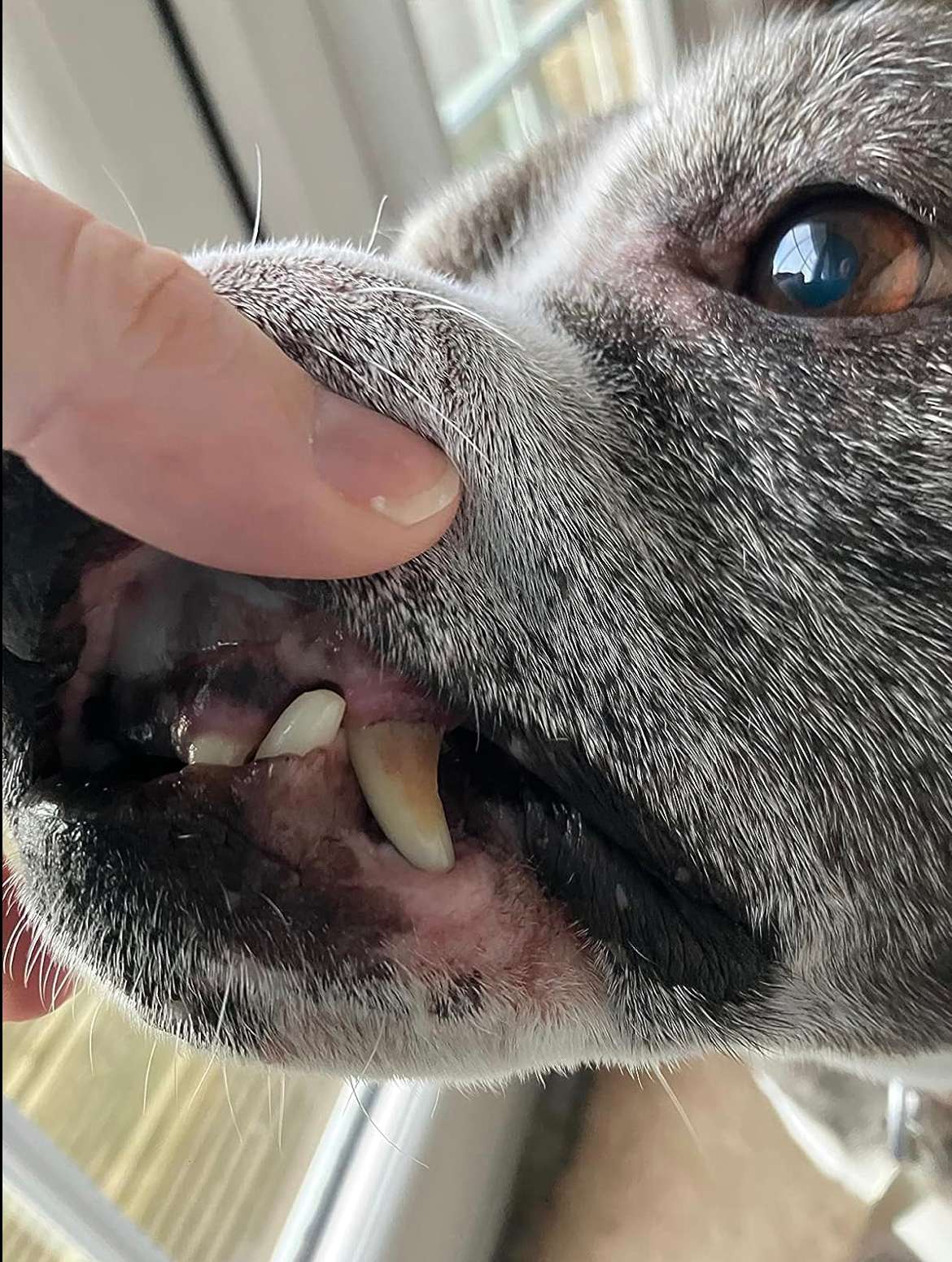
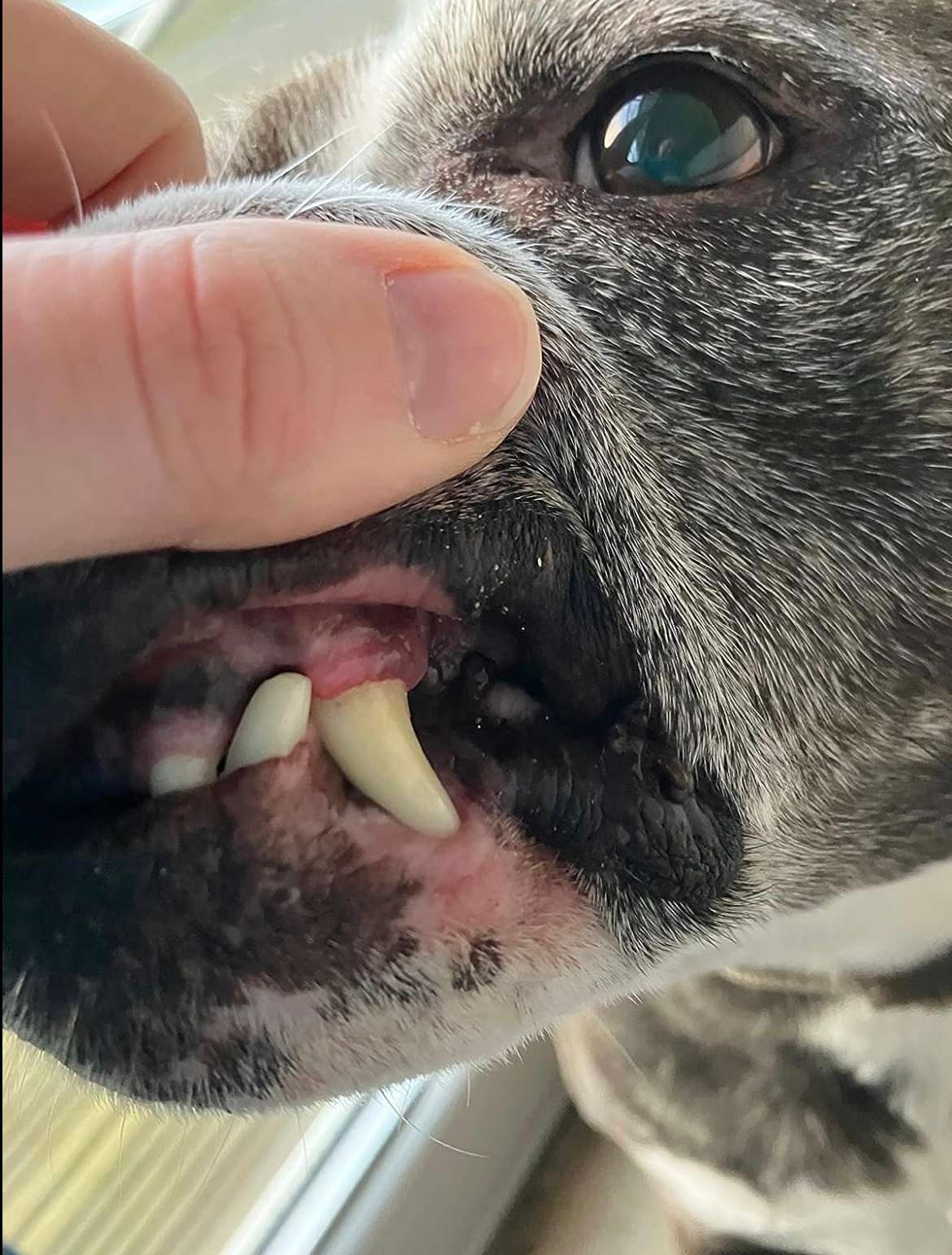
Authorized customer example. Results vary with tooth condition, amount of buildup, cooperation and correct use.
What verified buyers say about the routine
★★★★★“I introduced it slowly, and my dog did not mind me using it.”
Deanne · Verified buyer
★★★★★“The safety feature and quieter-than-a-phone vibration made me feel more comfortable.”
Jason H. · Verified buyer
★★★★★“The variable settings, built-in light, and quiet motor make it easy to use.”
Rose Marie · Verified buyer
Affordable entry points
The Starter Kit begins at $99.90. The Full Cleaning Kit is $129.90 and currently includes free US shipping. Choose based on the accessories you actually need; the core decision is whether your dog and the intended tooth are appropriate for controlled at-home surface care.
60-day results-based guarantee
Use the time to introduce the device gradually. If your dog does not accept the routine or the product is not the right fit under the guarantee terms, contact RodentLab support.
Frequently asked questions
Can I leave the transparent cap on during use?
No. It protects the working tip during storage and may remain on during early switched-off familiarization. Remove it before actual tooth contact.
Should I hold my dog still until the tooth is finished?
No. Use a step your dog can tolerate and stop early. Forced restraint can increase future resistance and can be unsafe.
Does quiet operation mean every dog will accept it?
No. Quiet operation removes one source of stimulation. Dogs still differ in their tolerance for mouth handling.
Can it replace professional cleaning?
No. It cannot diagnose disease, clean below the gumline, provide imaging, perform extractions or treat infection.
What if the tooth moves or the gum bleeds?
Stop. Do not use the device on that area. Contact a veterinarian.
Will all tartar come off in one session?
No. Some owners see movement quickly; others need several short sessions. Some deposits or teeth are not appropriate for home care.
Start smaller than your old routine
Device off. Calm cheek touch. Brief lip lift. Lowest level. One suitable tooth. Then stop.
See RodentLab and choose a kit