10 Things to Know Before Adding Seaweed Dental Powder to Your Dog’s Food Every Day.
Summary: Many dental powders use brown seaweed that naturally contains iodine. That may be a reasonable option for some dogs, but it deserves extra review when a dog has thyroid concerns, takes medication, has digestive sensitivity or simply refuses the taste.

RodentLab adds no powder, seaweed or iodine to food or water. That removes ingredient-specific questions, but introduces a different requirement: careful hands-on mouth use.
The word “natural” can make a daily dental powder sound like it needs no further thought.
But seaweed is not an empty flavoring. It is an active ingredient, and some commonly sold dog dental powders use Ascophyllum nodosum, a brown seaweed that naturally contains iodine.
That does not mean every seaweed powder is harmful to every dog. It means the ingredient, dose, dog’s health, medication, total diet and product directions matter.
1 “Dental powder” often means a daily seaweed supplement
The product may look like a small scoop of harmless seasoning, but the active ingredient is often kelp or brown seaweed. The product is swallowed every day so its compounds can act through saliva.
That is a very different route from brushing, a chew or a device placed directly on a visible tooth surface.
2 Seaweed naturally brings iodine into the decision
Iodine is used by the thyroid to make hormones. It is necessary in the right amount, but “necessary” does not mean unlimited or automatically appropriate for every dog.
The official ProDen PlaqueOff powder page identifies kelp as its active ingredient, notes the naturally high iodine content and warns that dogs with thyroid problems need veterinary guidance.
Compare the non-ingestible RodentLab option3 Thyroid concerns are not the place for “it’s only a little powder”
A dog with diagnosed thyroid disease, thyroid medication or active monitoring should not be treated like a generic healthy dog on an ingredient question.
Controlled canine research has shown that excessive dietary iodine can alter thyroid function and produce hypothyroid changes in studied dogs. That study does not prove a labeled serving of every dental powder causes harm. It does explain why added iodine deserves an informed decision.
4 Older dogs often have more health context to review
Older dogs are more likely to be monitored for ongoing conditions, take medication or have dietary restrictions. Canine hypothyroidism is also most commonly diagnosed in middle-aged dogs.
Age alone does not make seaweed unsafe. The point is that a senior dog’s complete health picture matters more than a generic “natural ingredients” claim.
5 Taste and digestion determine whether a daily powder is practical
The VOC research included owners describing food refusal, unpleasant odor and loose stool during early powder use. Those are owner-reported purchasing signals, not a universal side-effect rate.
A powder can be well tolerated by many dogs and still be a poor fit for a dog that detects the taste, refuses the meal or develops digestive upset.

6 A non-ingestible device removes those ingredient-specific questions
RodentLab contains no kelp, iodine, probiotic, flavoring or powder added to food or water. There is no daily ingredient dose to swallow and no change to the taste of the meal.
Therefore, the iodine, dose, taste and digestive-tolerance questions associated with a swallowed seaweed powder do not apply to the device.
That does not make RodentLab risk-free. Its risks are mechanical and behavioral: the dog must tolerate mouth handling, the owner must keep the tip on a suitable hard tooth surface and unsafe teeth must be left alone.

RodentLab™
Five levels, LED light and soft-tissue sensor for suitable visible hard tooth surfaces.
7 Powder and device do not perform the same job in the same way
A seaweed powder is swallowed daily and may support plaque or tartar control depending on the product and evidence. RodentLab is placed directly on a suitable visible hardened surface.
The powder may be easier for a dog that refuses all mouth handling. The device may suit an owner who does not want another ingredient in the bowl and whose dog accepts short one-tooth sessions.
Neither format can diagnose dental disease or replace the professional care an individual dog needs.
8 The transparent cap is for storage—not tooth contact
The clear cap protects the metal working tip while the device is stored. It can stay on during early switched-off familiarization so a dog can sniff the object safely.
Before actual use, remove the cap and place it aside. The exposed metal working tip—not the plastic cover—contacts the suitable hard tooth surface.
9 A hard fragment lifting is possible, not promised on every tooth
Verified RodentLab owners describe hardened material moving during one or several short sessions. The visible event may be an edge loosening or a small piece lifting from a back tooth.
Do not pry, chase the fragment or assume the entire mouth is now healthy. Tooth condition, buildup, cooperation and technique affect the outcome.

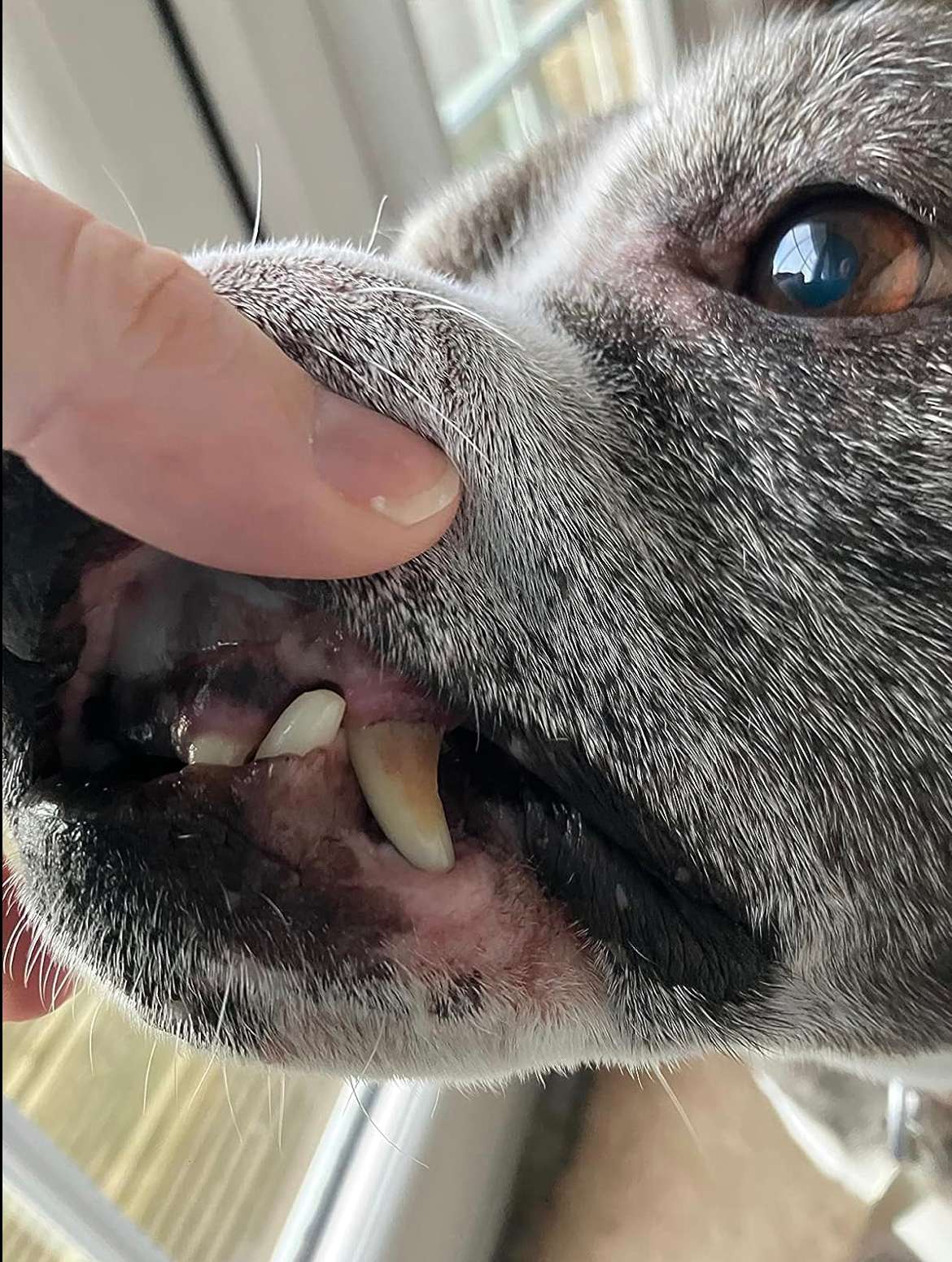
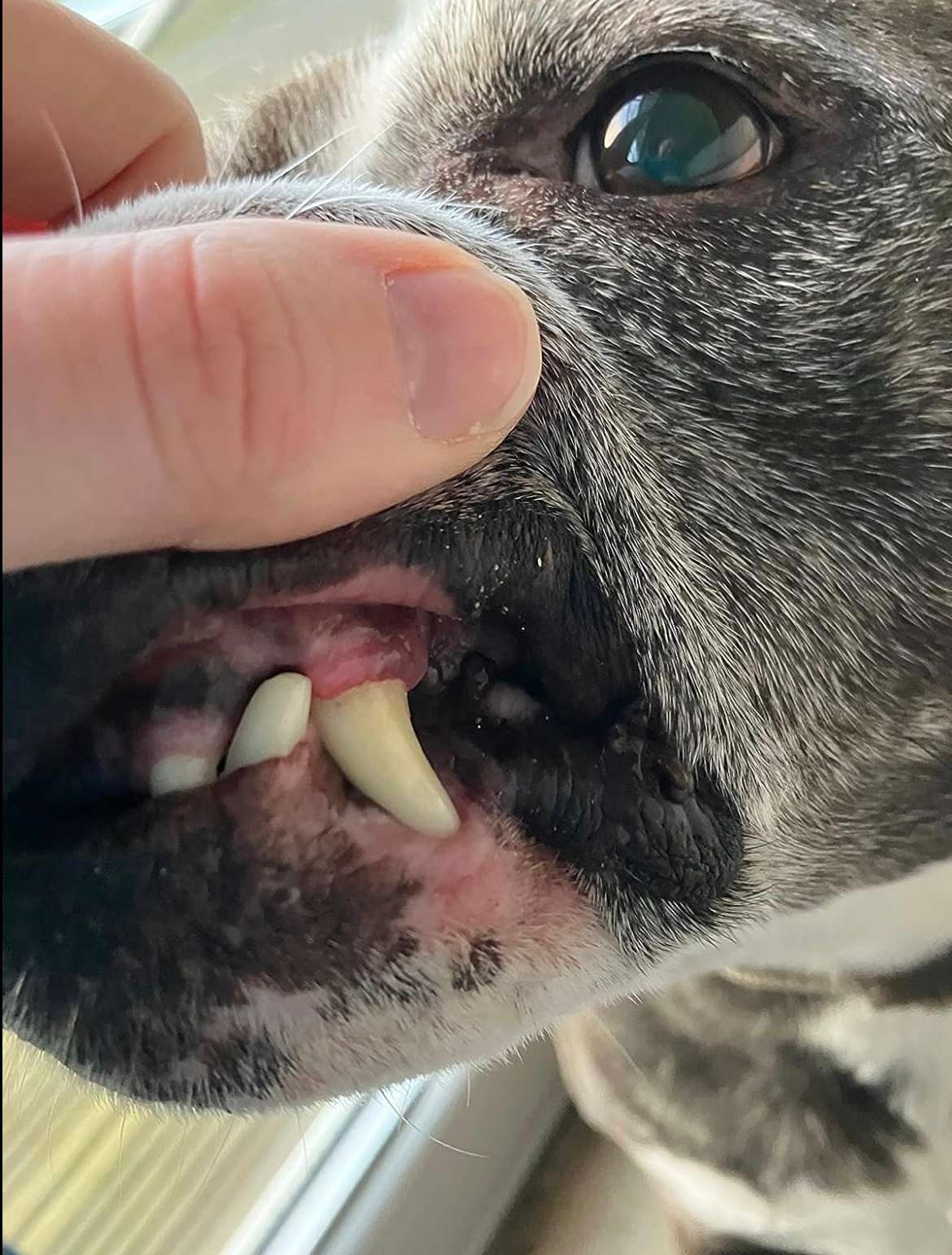
Authorized customer example. Results vary and do not establish what is happening below the gumline.
10 The right choice is the format that fits the dog—not the loudest claim
A seaweed powder may remain a reasonable option when the veterinarian is comfortable with the ingredient and dose, the dog eats it consistently and there is no taste or digestive problem.
RodentLab may be the clearer choice when the owner wants a non-ingestible approach, the target is suitable visible hard surface tartar and the dog accepts careful mouth handling.
Some dogs need professional treatment rather than either product. Loose teeth, damaged enamel, wounds, severe inflammation, bleeding, swelling or pain are not home-use situations.
Why dog owners choose the RodentLab route
The device is not swallowed and does not change food or water.
The owner can see the specific stable hard surface being addressed.
Five levels allow owners to begin on Soft and work one tooth at a time.
Not for loose, damaged, painful or bleeding teeth and not a replacement for professional care.
60-day results-based guarantee
The guarantee gives owners time to introduce the device gradually and learn whether the dog accepts the routine. Review the current terms on the official product page.
Questions to ask before choosing either route
Does every dog dental powder contain seaweed?
No. Read the exact ingredient label. This comparison applies to products using kelp or seaweed such as Ascophyllum nodosum.
Is seaweed automatically toxic to dogs?
No. The concern is suitability, dose and the individual dog—not a claim that every seaweed product harms every dog.
Why does iodine matter?
Iodine affects thyroid hormone production. Products with naturally high iodine deserve veterinary review when a dog has thyroid disease, medication or monitoring needs.
Are older dogs forbidden from using dental powder?
No. Age alone is not a universal contraindication. Older dogs often have more health context and medication to review with a veterinarian.
Does RodentLab contain iodine?
No. It is a non-ingestible device and adds no kelp, iodine or powder to food or water.
Does that make RodentLab risk-free?
No. Mechanical use requires correct positioning, a suitable stable tooth and a dog that safely accepts handling.
Can RodentLab replace professional cleaning?
No. It cannot diagnose, image, clean below the gumline, extract or treat disease.
Should the clear cap stay on?
Only for storage or switched-off familiarization. Remove it before actual tooth contact.
What if my dog refuses mouth handling?
Do not force it. Consider cooperative-care training, veterinary help or another suitable format.
Can I use powder and RodentLab together?
Ask your veterinarian to review the powder ingredient and your dog’s health. RodentLab’s mechanical-use limits still apply.
Will tartar always fall off?
No. Some owners report a visible piece releasing; timing and results vary, and some teeth are not appropriate for home use.
What signs mean I should stop?
Movement, pain, bleeding, swelling, cracked enamel, wounds, severe inflammation or distress.
Sources behind the ingredient comparison
- ProDen PlaqueOff official powder page: active kelp ingredient, natural iodine content and thyroid caution.
- Veterinary Journal canine iodine study: excessive dietary iodine altered thyroid function in the studied dogs.
- Merck Veterinary Manual: canine hypothyroidism background, diagnosis and treatment.
- Veterinary Oral Health Council accepted products: confirms that qualifying ingestible products can have evidence-backed plaque or tartar claims.
Prefer a dental option with nothing added to the bowl?
Review RodentLab’s exact price, five levels, LED, soft-tissue sensor, working limits and 60-day guarantee.
Compare the Starter and Full Cleaning kits