After Rescuing More Than 10,000 Dogs, I Discovered Why Every Dental Chew and Toothbrush Kept Failing Our 100+ Shelter Dogs
A veteran canine rescue director reveals the hidden difference between soft plaque and hardened tartar—and the one device her facility now uses between veterinary cleanings.

The shelter tried brushing, chews and repeat cleanings. The visible deposits kept returning.

RodentLab at-home surface-care kit
Designed for gradual care on suitable visible hard tooth surfaces between veterinary visits.
- Five adjustable levels, LED visibility and soft-tissue sensing
- 60-day results-based money-back guarantee
Your dog should have had cleaner teeth by now. You bought the recommended brush. You gave dental chews. You tried powders, water additives, and special food. Yet the yellow-brown deposits on the back teeth remained.
If that sounds familiar, I need you to hear this: it is not because you do not care enough.
You have been using tools designed for soft plaque to fight a deposit that has already hardened into tartar.
After 10,000 rescues, I realized everything I knew was incomplete
Our facility receives dozens of dogs every week—strays, senior surrenders, dogs from breeding operations, and dogs who have gone years without consistent dental care.
For the first three years, we followed the standard routine: brushing, dental chews, oral additives, and repeated professional cleanings.
The cost was enormous. And for many dogs, the deposits still came back.
A golden retriever named Biscuit changed everything. We followed every recommendation, yet his back teeth remained covered in hardened buildup and he became reluctant to chew harder food.
The research exposed the missing step
Plaque begins as a softer film that brushing can help remove. But after it mineralizes, it becomes hard tartar. A toothbrush can glide over it. A chew can only contact the teeth a dog actually chews with.
That means the back teeth, inner surfaces, and deposit edges can remain even when the owner is doing everything “right.”
A veterinary partner showed us RodentLab
The RodentLab™ Silent Ultrasonic Plaque & Tartar Remover gave our team the control we had been missing.
- Five levels let each dog begin with the gentlest setting.
- The LED light makes the back teeth and tartar edges visible.
- The soft-tissue sensor adds control near the gumline.
- Operation under 30 dB helps noise-sensitive rescue dogs stay calmer.
- Short, one-tooth sessions can be repeated without turning care into a fight.

What happened next challenged seven years of conventional wisdom
We started with stable dogs, the lowest setting, and only one visible tooth at a time. Every calm interaction ended with a reward.
Biscuit completed one tooth during his first session. Over the next several short sessions, more of the hardened visible buildup released. He returned to normal chewing.
The adoption call I will never forget
One adopter took home a seven-year-old small dog who panicked around electric toothbrushes. We told her not to rush. For several days, the dog was rewarded simply for approaching the switched-off device.
She later called and said, “This is the first time she has let me see the back teeth without running away.”
A few short sessions later, she sent us photos showing a visible reduction in the hardened yellow deposits brushing had never removed.
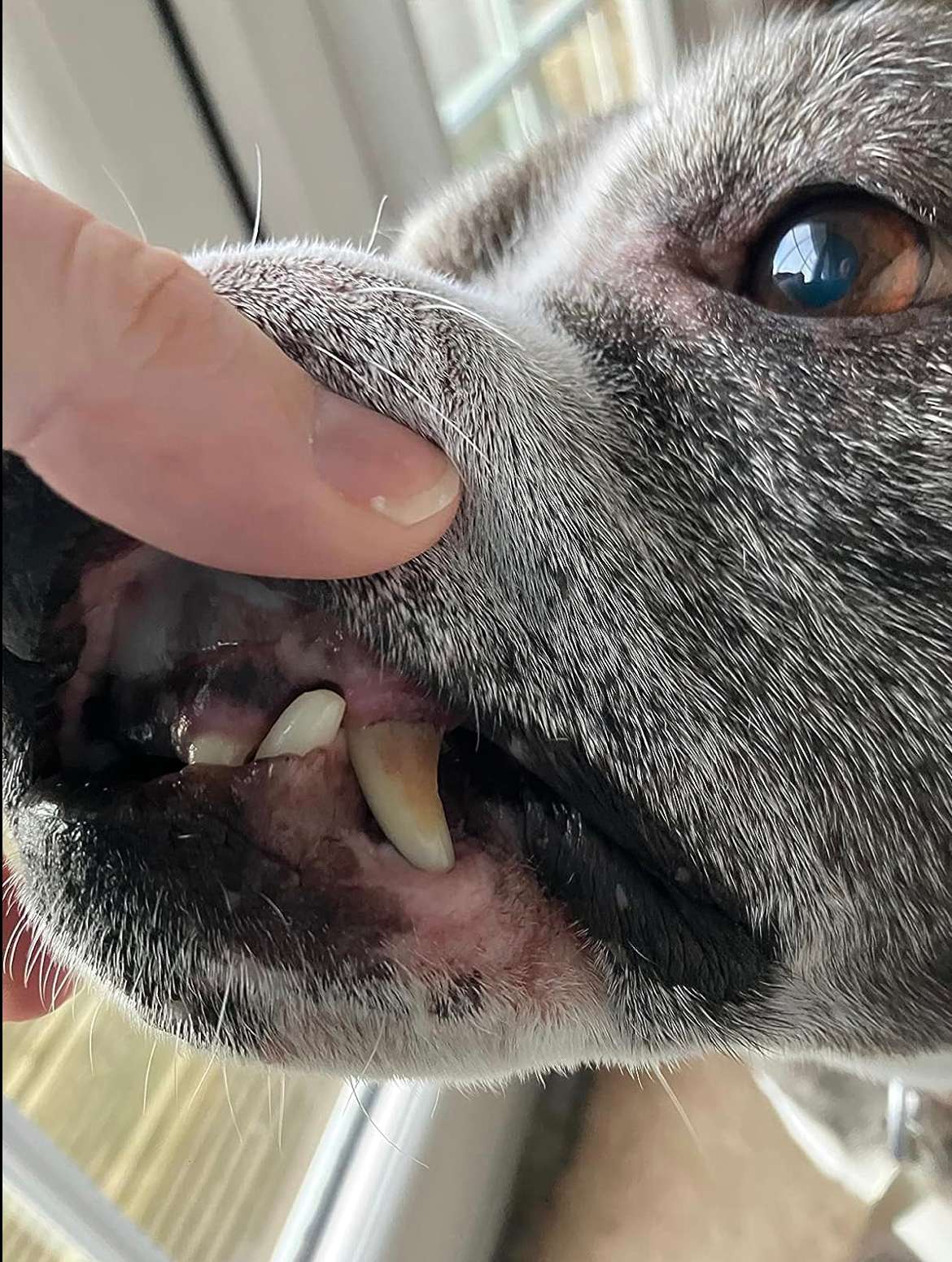
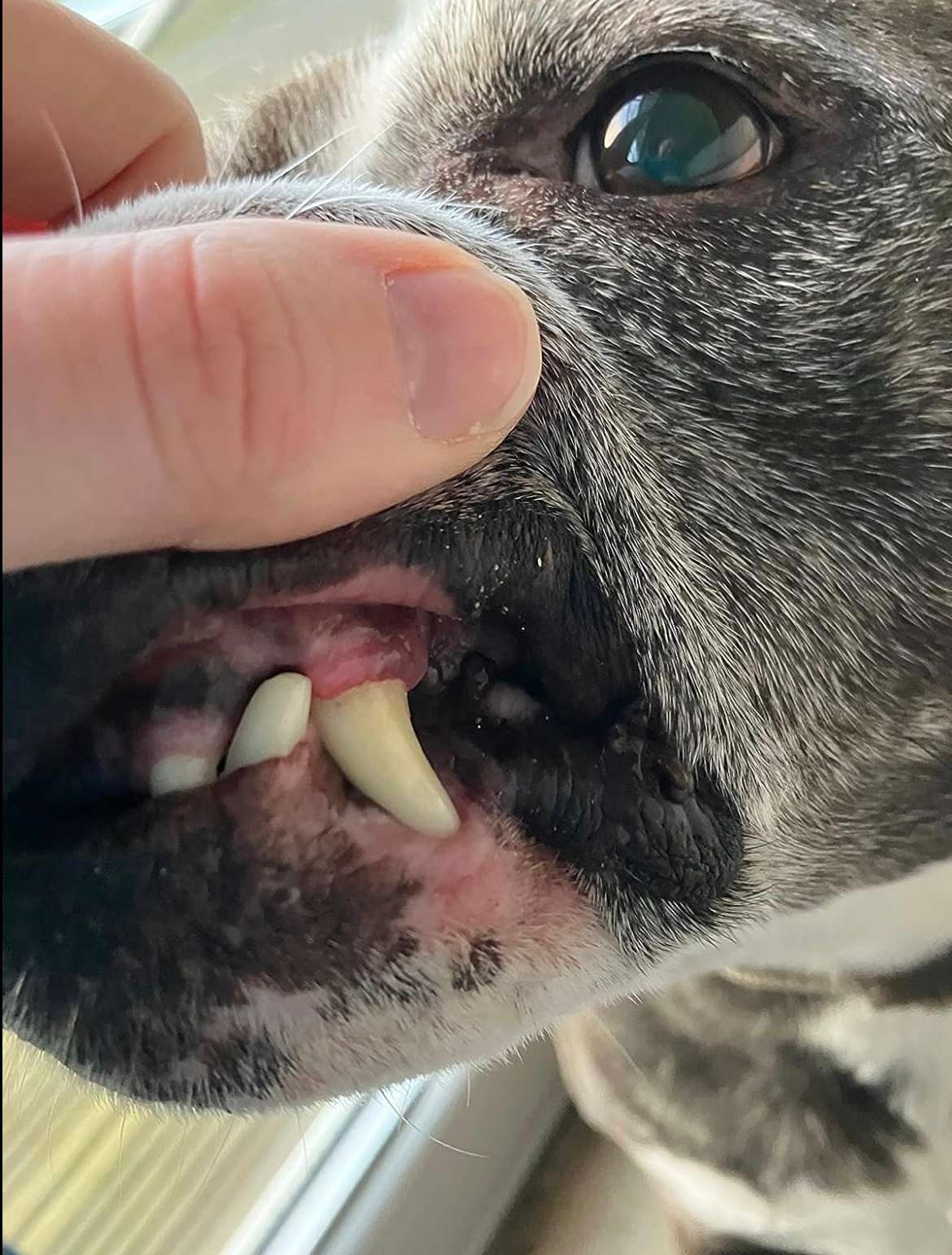
Authorized customer example. Individual results vary.
Your dog was never meant to live in this cycle
Persistent bad breath. Hardened deposits. Discomfort while chewing. Every attempt to touch the mouth becoming a struggle.
RodentLab gives owners a practical way to act on visible hardened buildup at home, one tooth and one calm session at a time, instead of waiting for the same cycle to repeat.
“I introduced it slowly and my dog did not mind me using it.”
Deanne · Verified buyer“The safety feature worked as described, and it was quieter than my phone vibration.”
Jason H. · Verified buyer“The hard yellow and black buildup came away after a few short sessions.”
Christina J. · Verified buyerFor routine care on suitable visible hard tooth surfaces only. This product is not a substitute for veterinary diagnosis, below-gumline cleaning, professional dental treatment, or emergency care. Do not use on loose or damaged teeth, open wounds, severe gum inflammation, or any area causing pain or bleeding. Individual results vary.