After 15 Years in Canine Dental Care, I Told One Client Why Her $1,800 Cleaning Had Failed. I Was Fired That Same Day.
A former senior veterinary dental technician reveals why the pet dental industry profits when hardened tartar keeps coming back—and the between-visit step most dog owners are never shown.

For 15 years, Ray assisted with canine dental procedures. One repeat case changed how he viewed the entire system.

RodentLab at-home surface-care kit
Designed for gradual care on suitable visible hard tooth surfaces between veterinary visits.
- Five adjustable levels, LED visibility and soft-tissue sensing
- 60-day results-based money-back guarantee
For most of my career, I believed I was doing the most important work in the clinic. Every morning I put on my scrubs, prepared the dental room, and helped clean teeth covered in thick yellow, brown, and sometimes black deposits.
Hours later, the visible tooth surfaces looked clean. The owner paid the invoice, thanked us, and took the dog home.
Then months later, many of them came back.
The same dog. The same breath. The same hardened buildup. Sometimes worse than before.
The private spreadsheet that changed everything
I started tracking repeat cases on my own: what the family paid, how soon visible tartar returned, and what our clinic recommended next.
That was not a small oversight. Repeat dental procedures are enormously profitable. A dog owner who can maintain suitable visible tooth surfaces at home needs fewer repeat interventions for minor surface buildup.
The case I could no longer ignore
Angela had already paid for two professional cleanings for her three-year-old dog, Lily. After each appointment, Lily’s teeth looked clean. Within months, the yellow-brown deposits returned along the back teeth.
When Angela was handed a third estimate—$1,800—she looked at me and asked a simple question:
That day, I did not repeat the clinic script. I told her what dog owners should have been told from the beginning.
Plaque and hardened tartar are not the same problem
Fresh plaque is a softer bacterial film. Brushing can help remove it before it hardens.
But once that material mineralizes into tartar, ordinary bristles often pass over the surface. Dental chews only rub the areas a dog happens to chew with. The back teeth, inner surfaces, and buildup near the gumline can remain untouched.
Owners are left in a predictable loop: brush, buy another chew, briefly improve the breath, watch the brown buildup stay in place, and eventually book another expensive procedure.
The at-home technology we discussed behind closed doors
During an industry training session, I learned about ultrasonic surface-care tools designed to break down suitable hardened deposits one visible tooth at a time.
My research led me to the RodentLab™ Silent Ultrasonic Plaque & Tartar Remover.
- Five adjustable levels, so owners can begin at the lowest setting.
- A built-in LED that illuminates the back teeth and deposit edges.
- A soft-tissue sensor designed to stop vibration against gums and other soft tissue.
- Whisper-quiet operation under 30 dB for noise-sensitive dogs.
- A slim cleaning head for working gradually on one visible tooth surface at a time.

This gave owners a practical way to work gradually on visible hardened buildup at home instead of waiting for every spot to become another four-figure procedure.
“Don’t pay us again. Try this first.”
I showed Angela how to introduce the device while it was switched off, begin on the lowest level, use the LED to choose one visible hard surface, and end each session before Lily became restless.
The next morning my supervisor called me into the office. Billing had flagged the account. I was told I had violated clinic policy by recommending an outside solution instead of another billable service.
I said charging a family $1,800 for the third time without teaching them how to maintain the result was something I would no longer do.
They handed me a box for my things.
Two weeks later, Angela sent the photo that made it worth it
She did not force Lily through a full-mouth session. She started with one tooth, one short session, and the lowest setting. Over several calm sessions, the hardened visible deposits began to release.
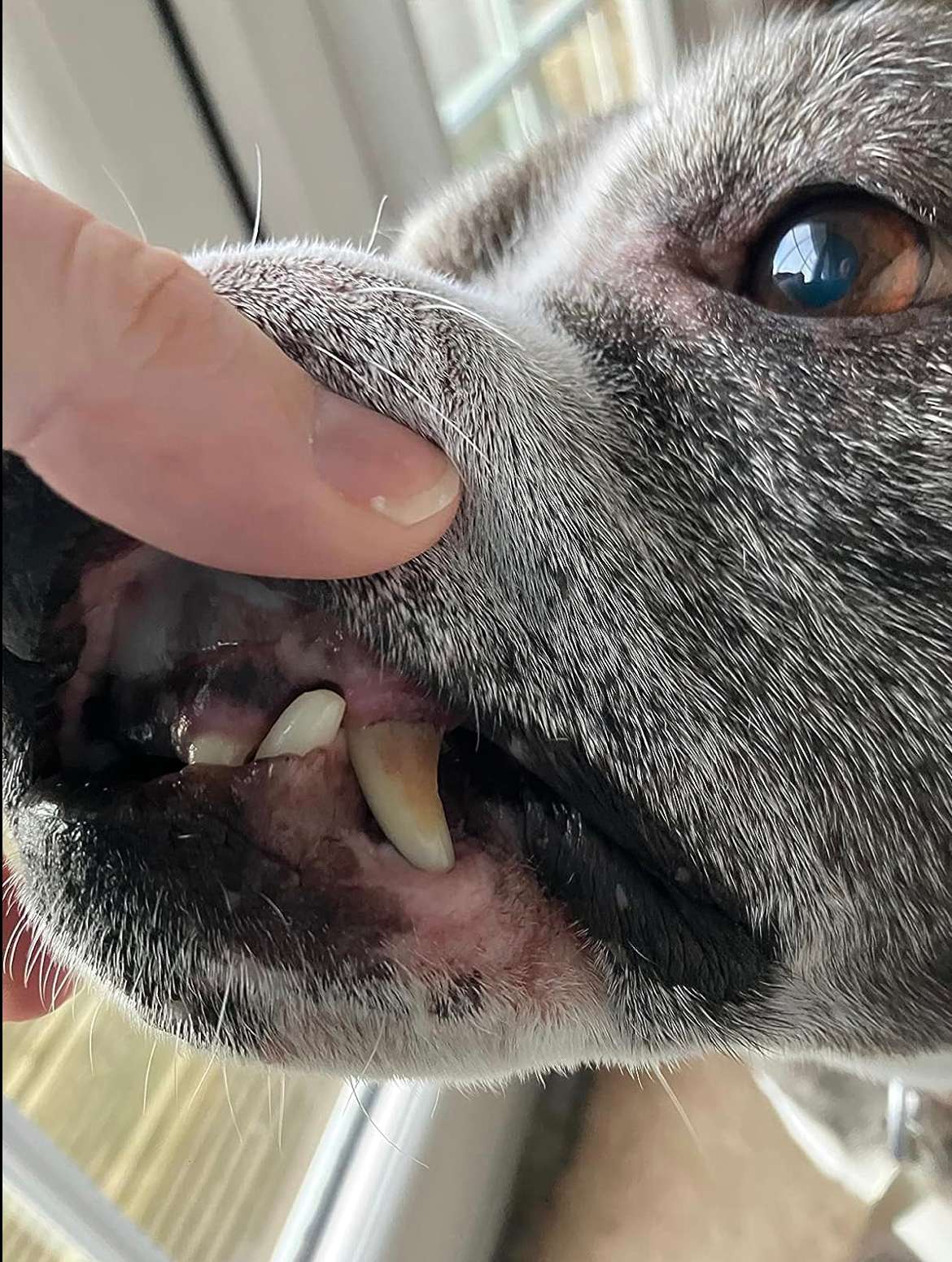
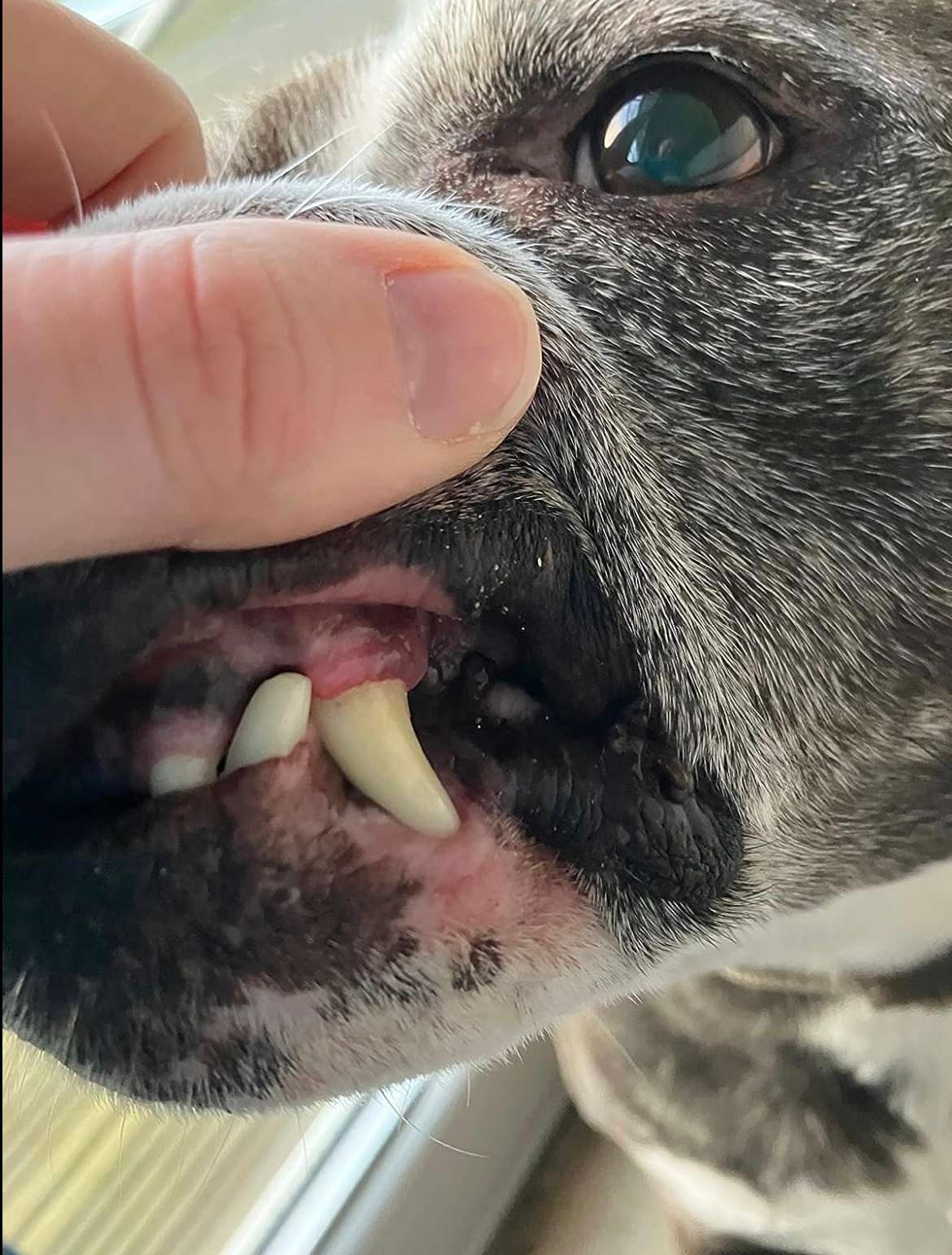
Authorized customer example. Results vary by tartar thickness, dog cooperation, and use.
What dog owners report
“The hard yellow and black buildup came away after a few short sessions on each tooth.”
Christina J. · Verified buyer“The variable settings, built-in light and quiet motor made it easy to use.”
Rose Marie · Verified buyer“It removed some tartar the first time and the rest took a few sessions.”
Shaune · Verified buyerWhy it can be difficult to keep in stock
Dog owners rarely purchase only for themselves after they see the difference. Multi-dog homes, rescue organizations, groomers, and care facilities often order more than one kit.
If the official product page is still available, stock is currently being offered.
For routine care on suitable visible hard tooth surfaces only. This product is not a substitute for veterinary diagnosis, below-gumline cleaning, professional dental treatment, or emergency care. Do not use on loose or damaged teeth, open wounds, severe gum inflammation, or any area causing pain or bleeding. Individual results vary.